Designing a product that stopped being one app and became a multi-role system.
Teamateur started with a web MVP focused on bookings and operations. As the product grew, I designed and led an experience that now connects players, venue owners and tournament organizers with very different jobs to be done.
The problem was not designing more screens. It was sustaining different products inside one ecosystem.
Players need to discover, book and play quickly. Venue owners need inventory, availability, exceptions, money and operational control. Organizers need denser information and management tools. My job was to separate those needs without fragmenting the product logic.
Fast actions, discovery, booking, teams, community and competition.
Operational control, venues, courts, schedules, bookings, payouts and promotions.
Dashboard, teams, fixtures, standings, roles, players and sponsors.
Plans and monetization introduced where they add capacity rather than arbitrary friction.
From a web MVP to an app that solves more decisions.
The journey shows how Teamateur moved from a web booking experience to a mobile ecosystem covering discovery, coordination, split payments, teams and tournaments. Every screen in this block comes from the actual project material shared for the portfolio.
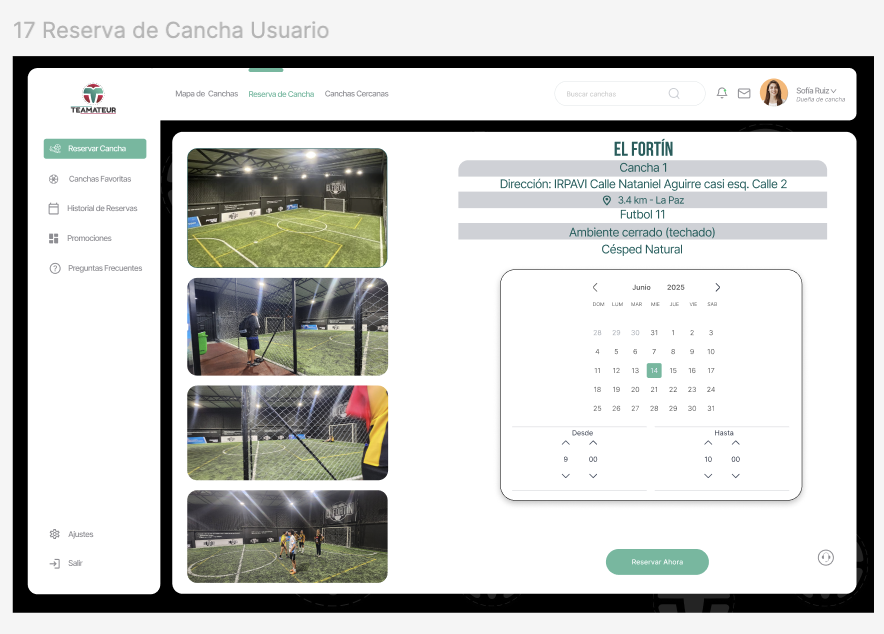
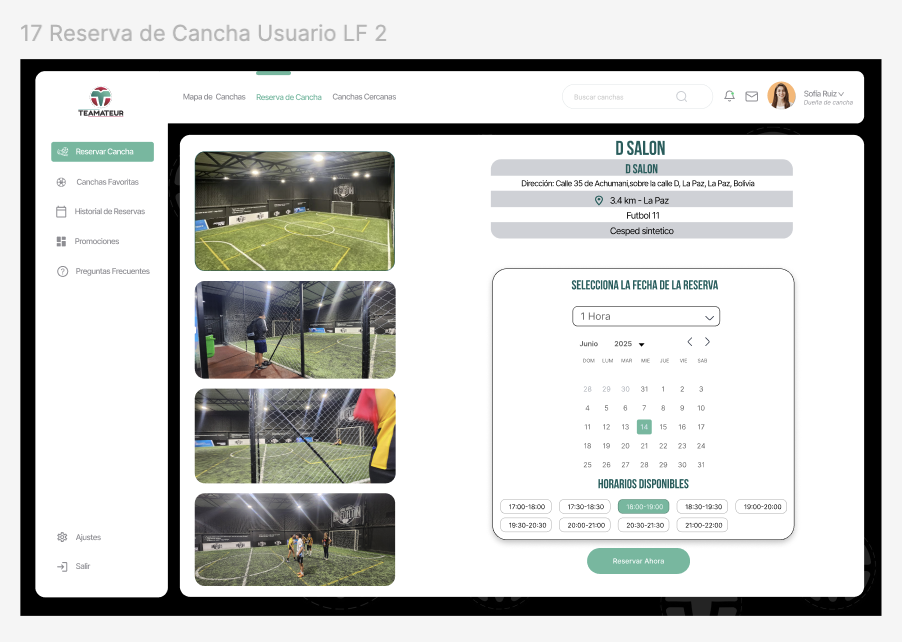
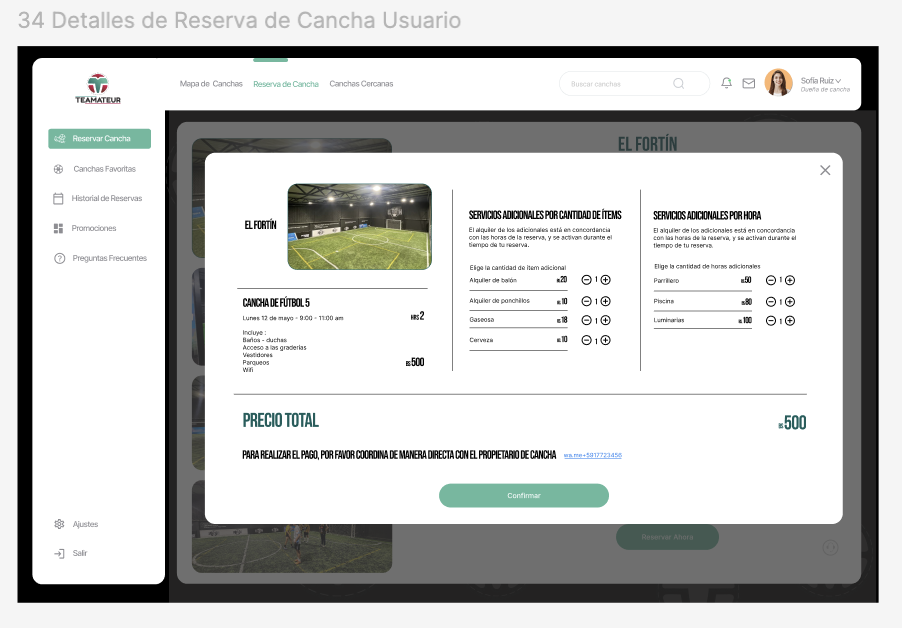
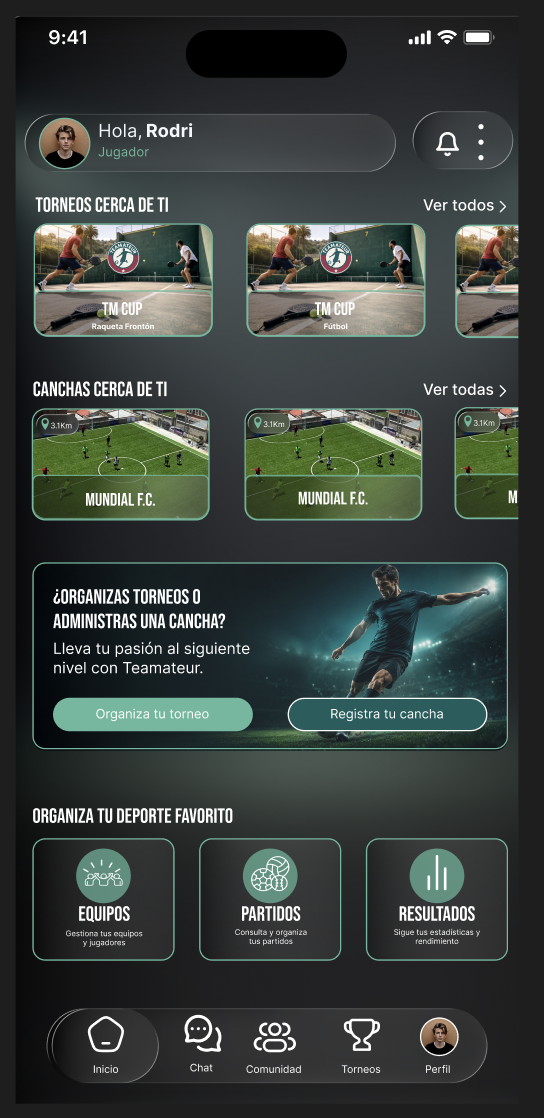
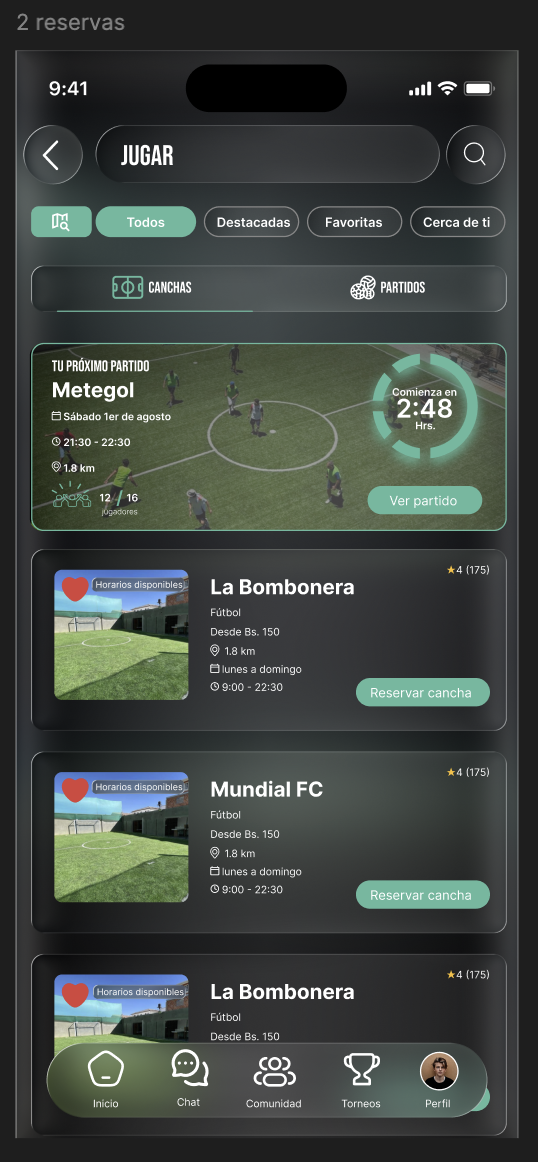
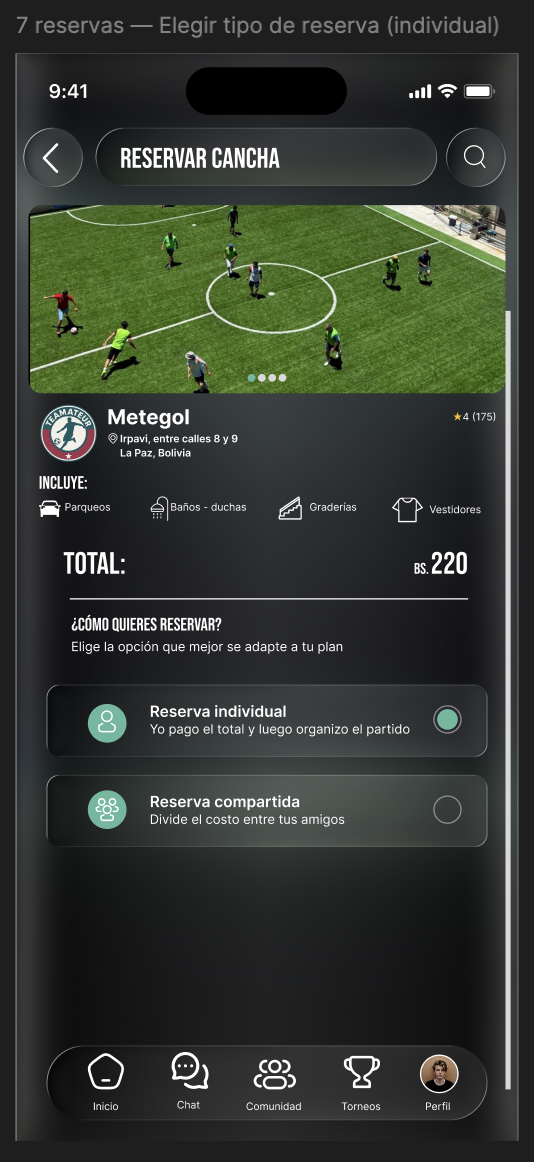
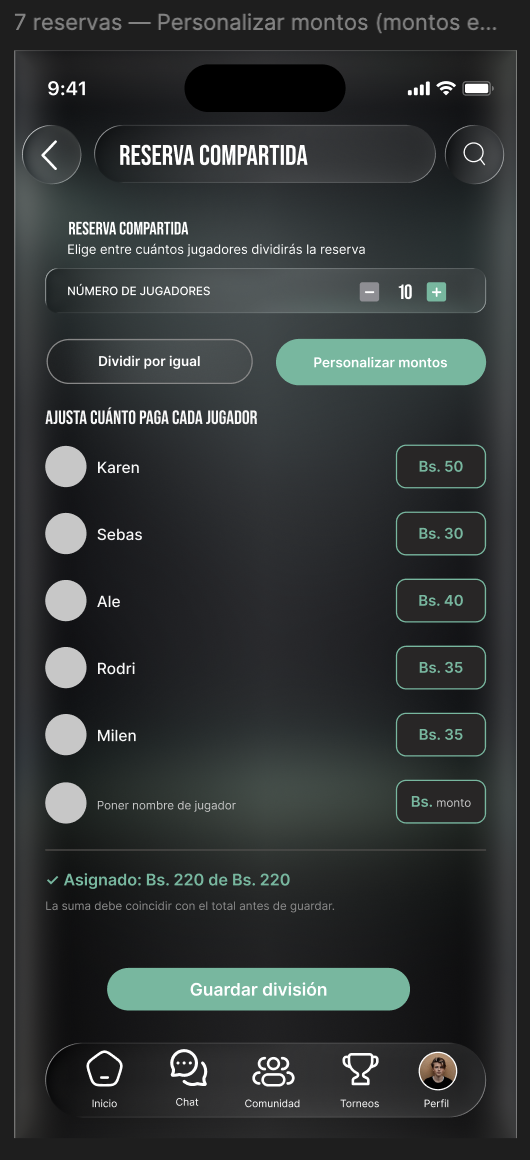
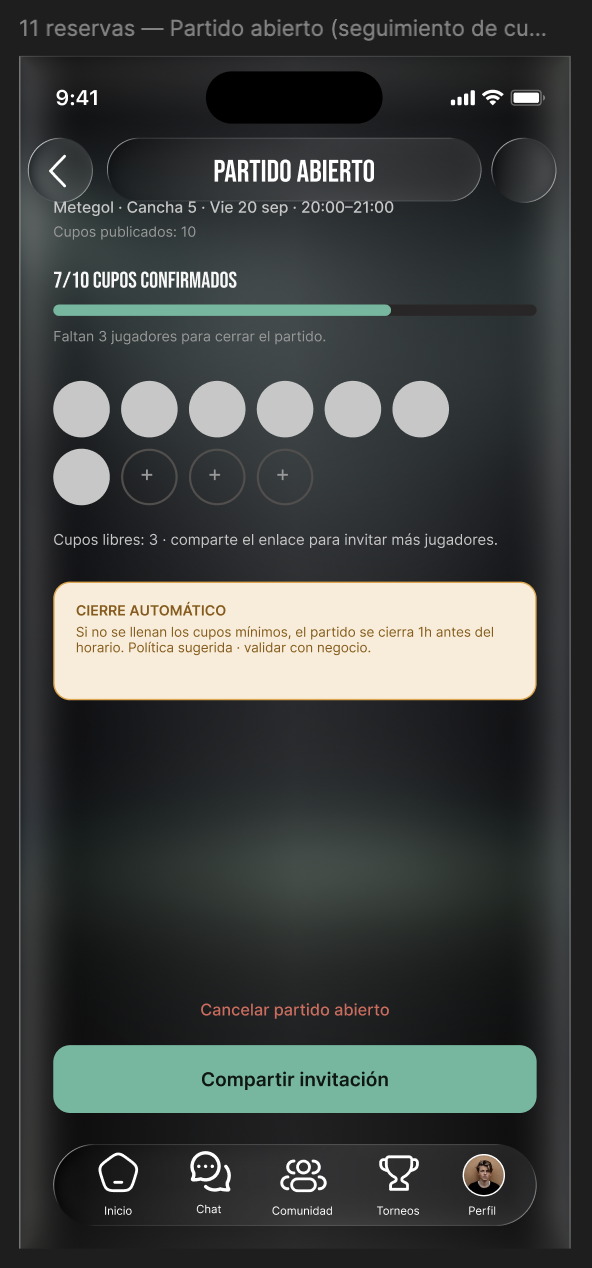
The main evolution is not merely visual: the flow stops assuming a single booking model and starts solving booking modes, cost splitting and player coordination.
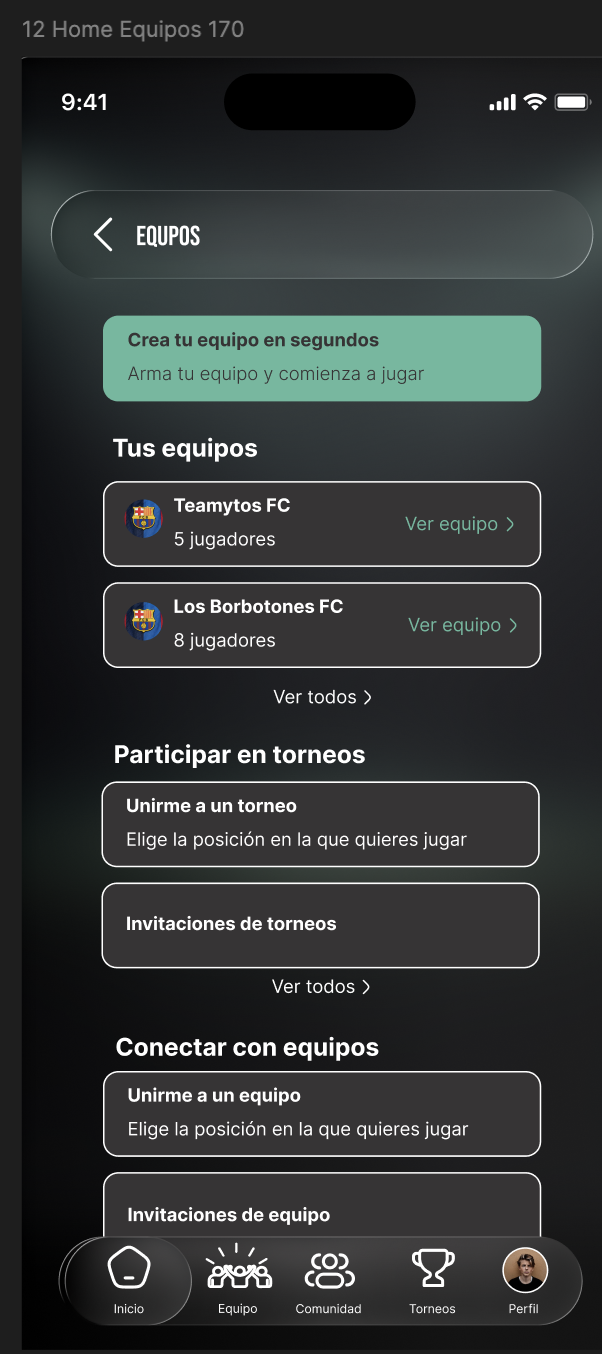
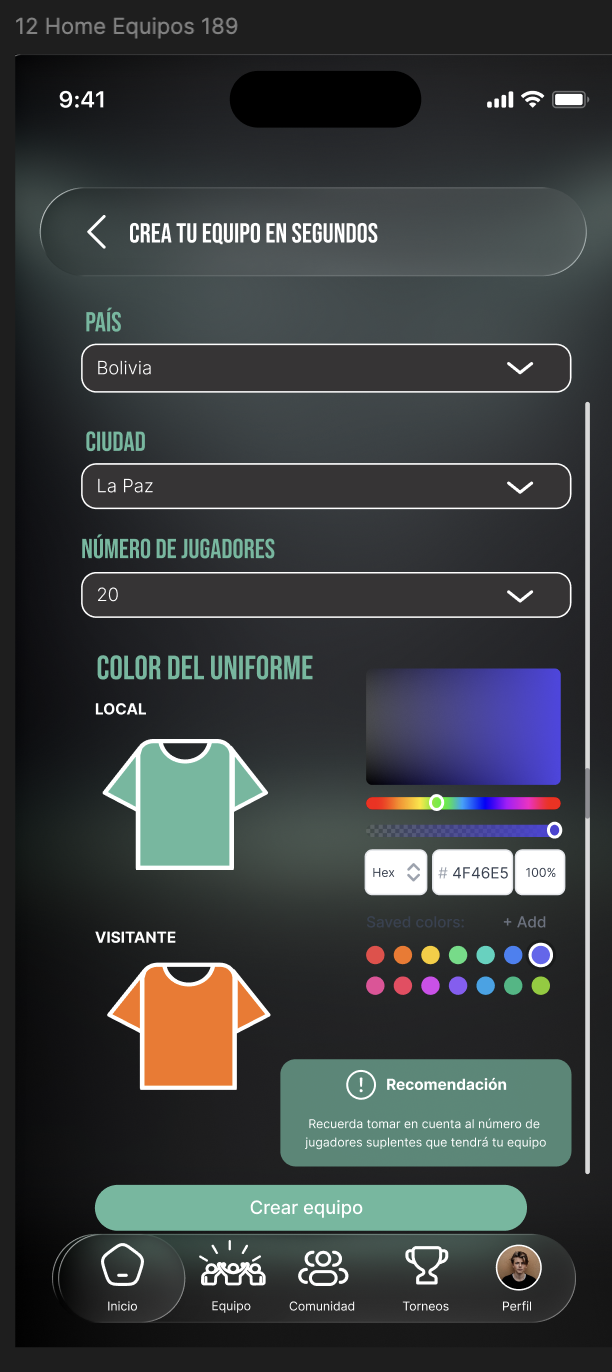
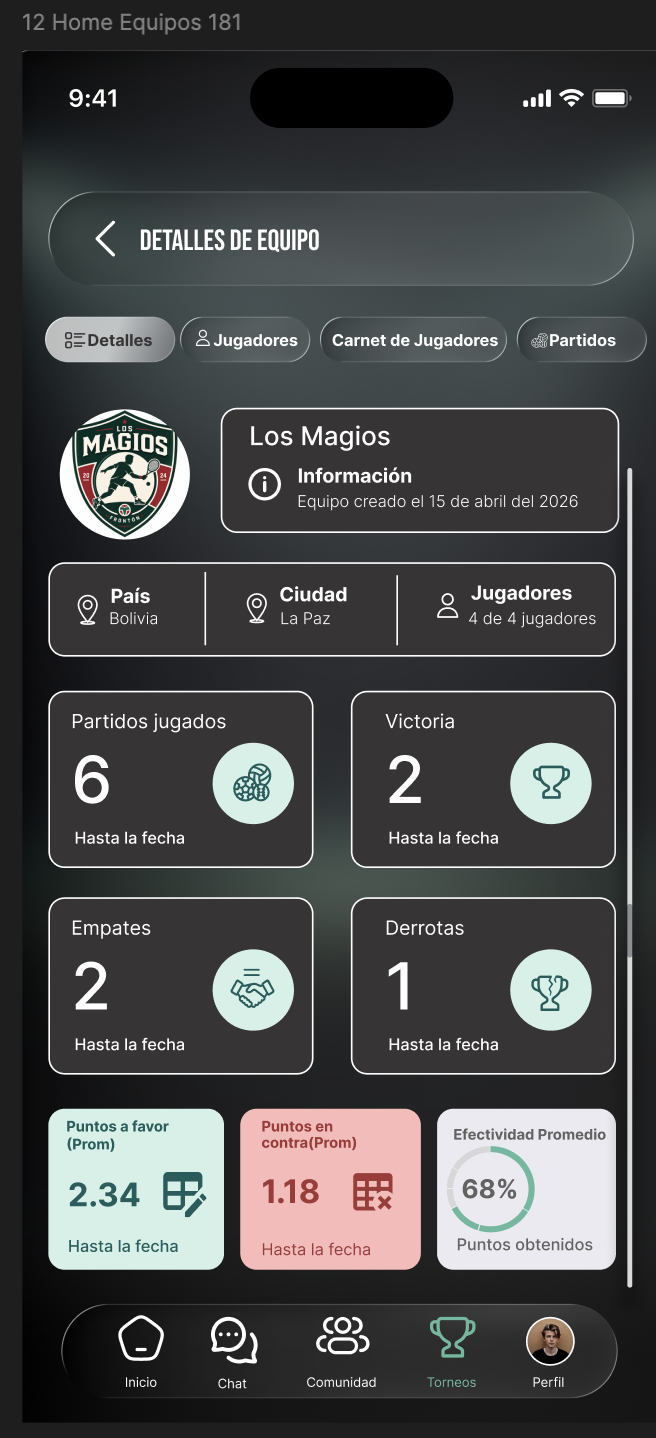
Teams turns the app into a continuity tool, not only a booking tool.
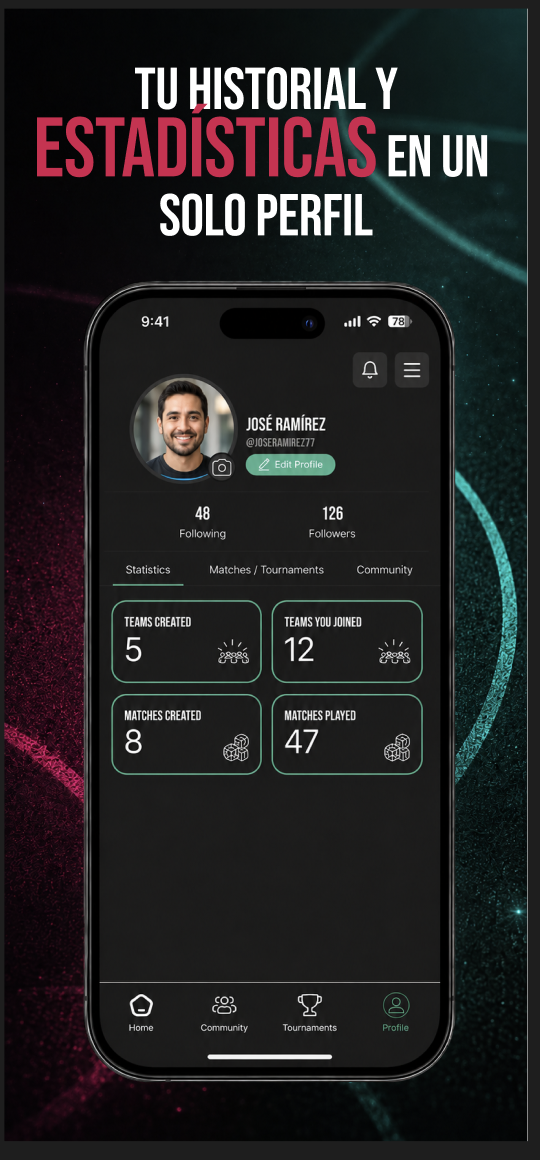
Players can create and manage teams, invite people, join tournaments and review accumulated performance. The logic connects identity, community and competition.
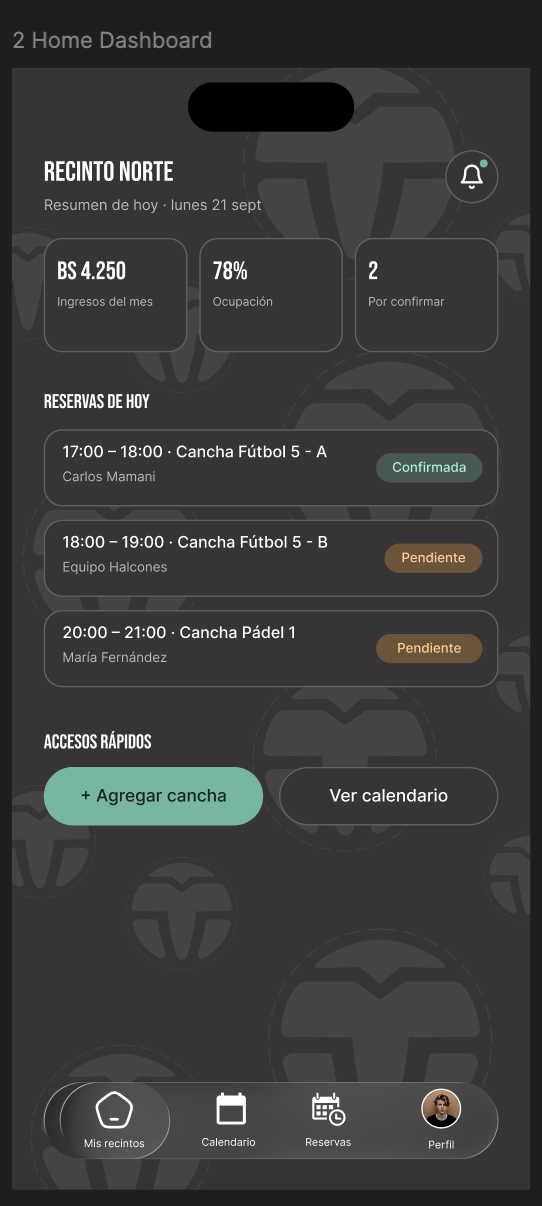
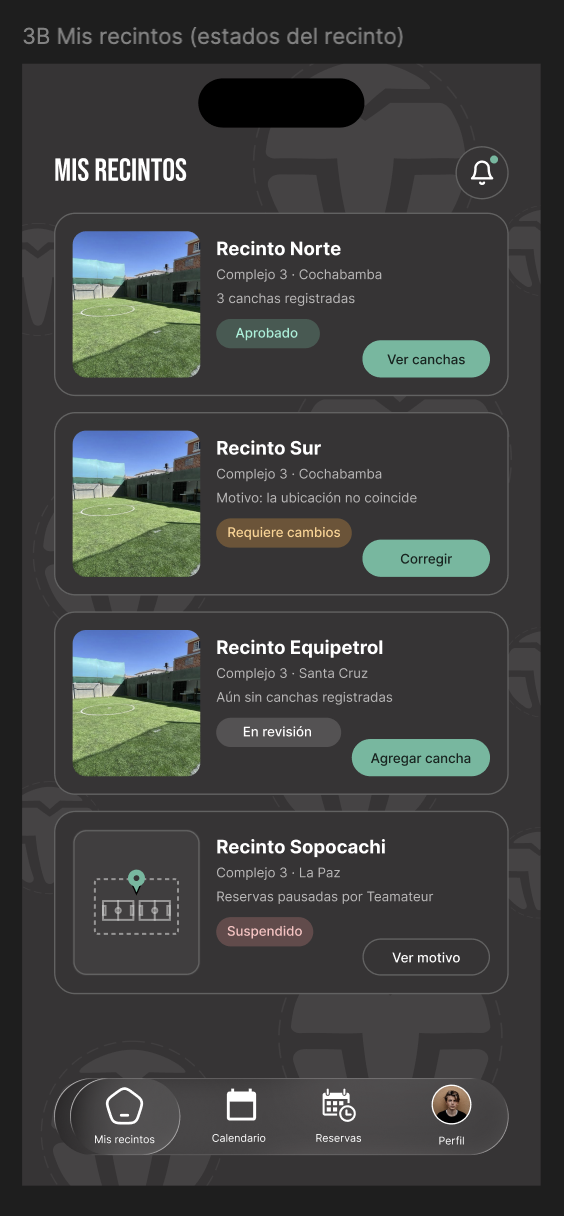
The venue-owner experience is an operational workstream still in development.
I give it less weight than Bookings 3.0 because it is still being designed. The focus shifts from discovery and play to venue control, operational states, occupancy and bookings.
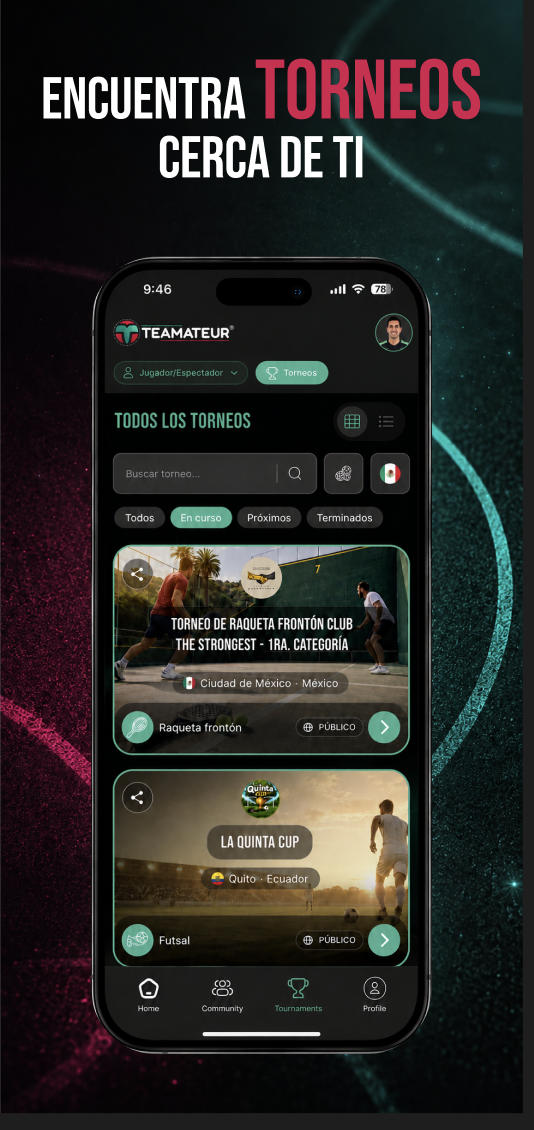
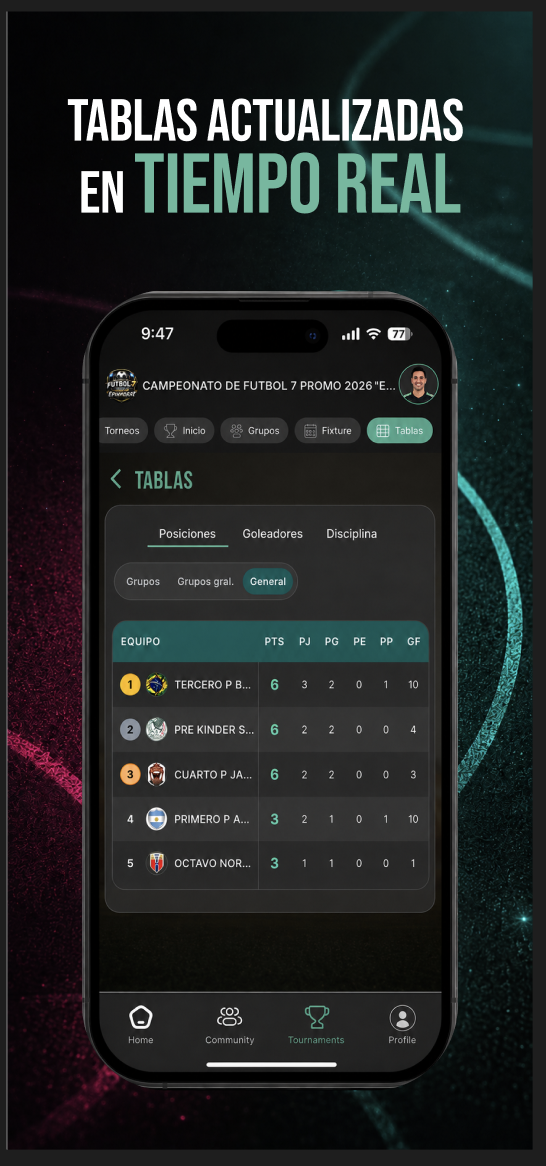
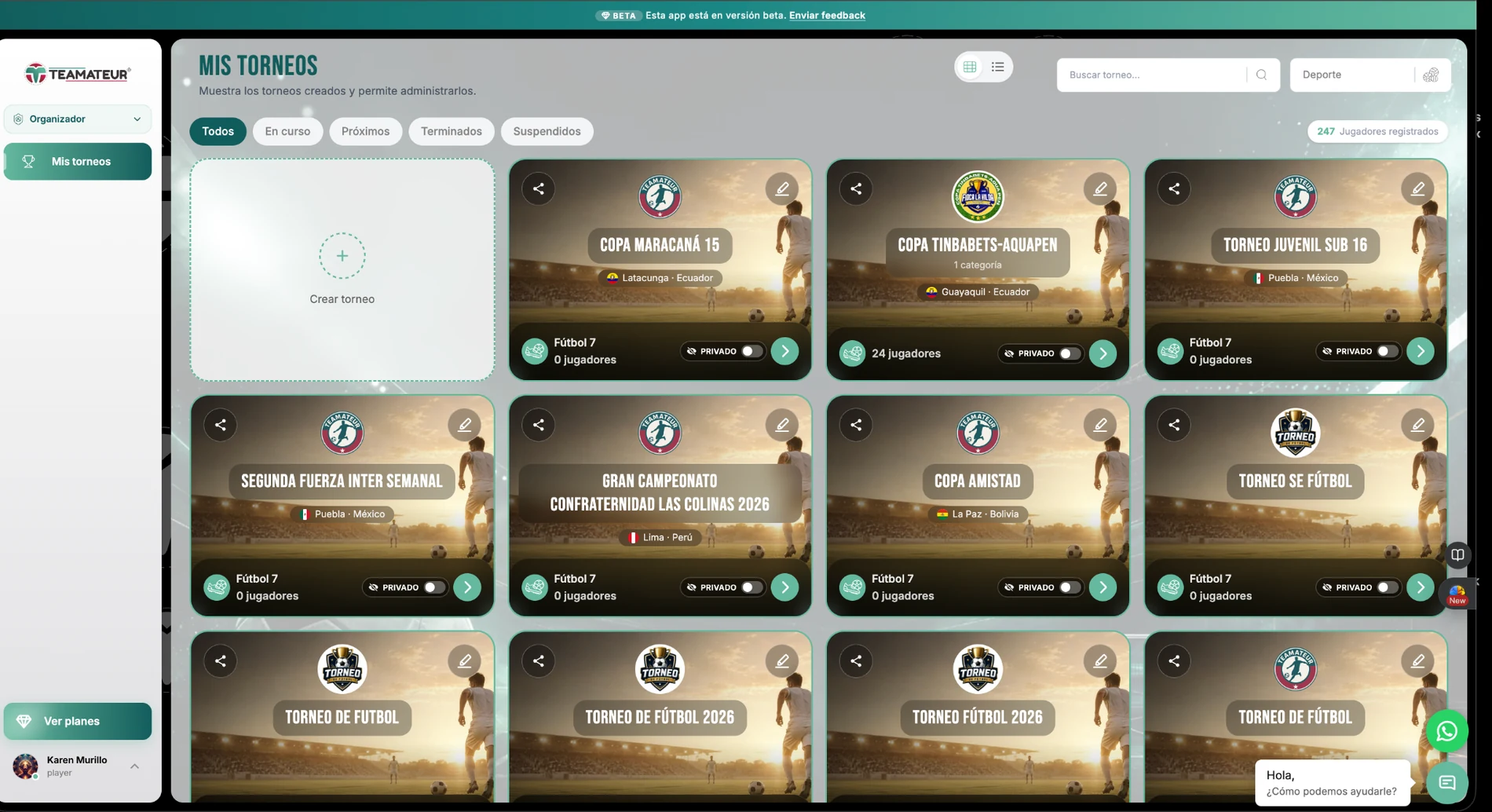
Tournaments adds discovery, identity and competitive tracking.
The experience goes beyond registration: players need to discover competitions, understand standings and build a history of participation.
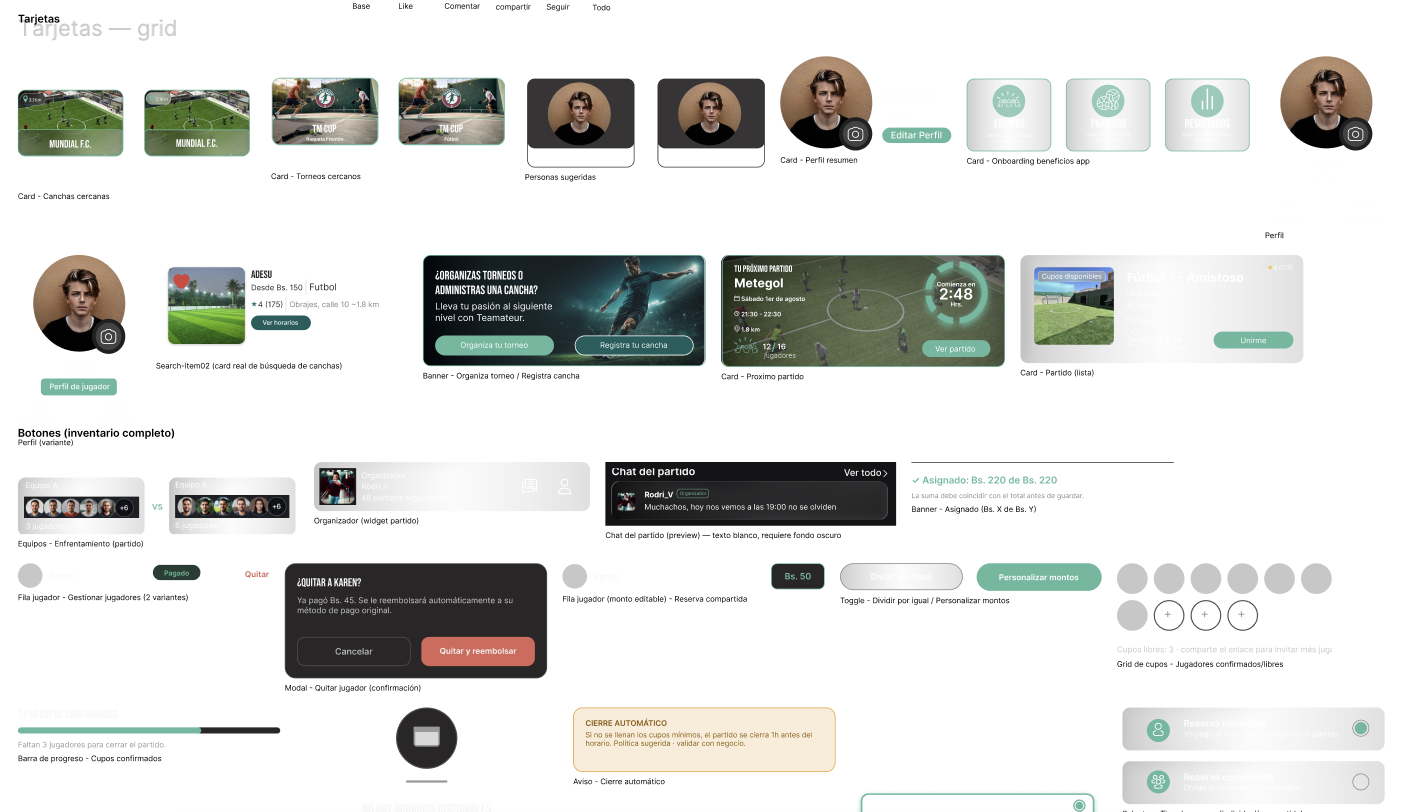
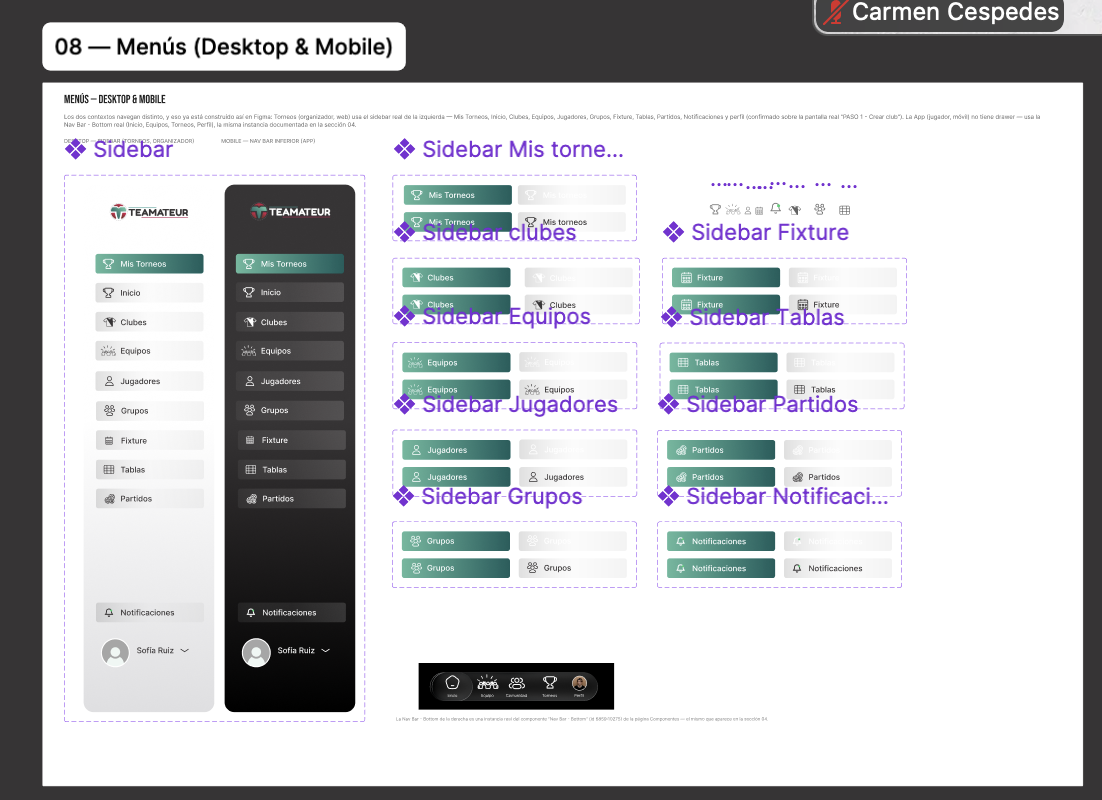
Consistency became product infrastructure.
The system documents real components, navigation and consistency between the app and tournament experiences. It is not a decorative library; it reduces repeated decisions as the product expands.
This case demonstrates product evolution, not a collection of screens.
This case shows screens and product decisions designed or led by me. The current corporate landing page at teamateur.com is not part of my visual authorship.